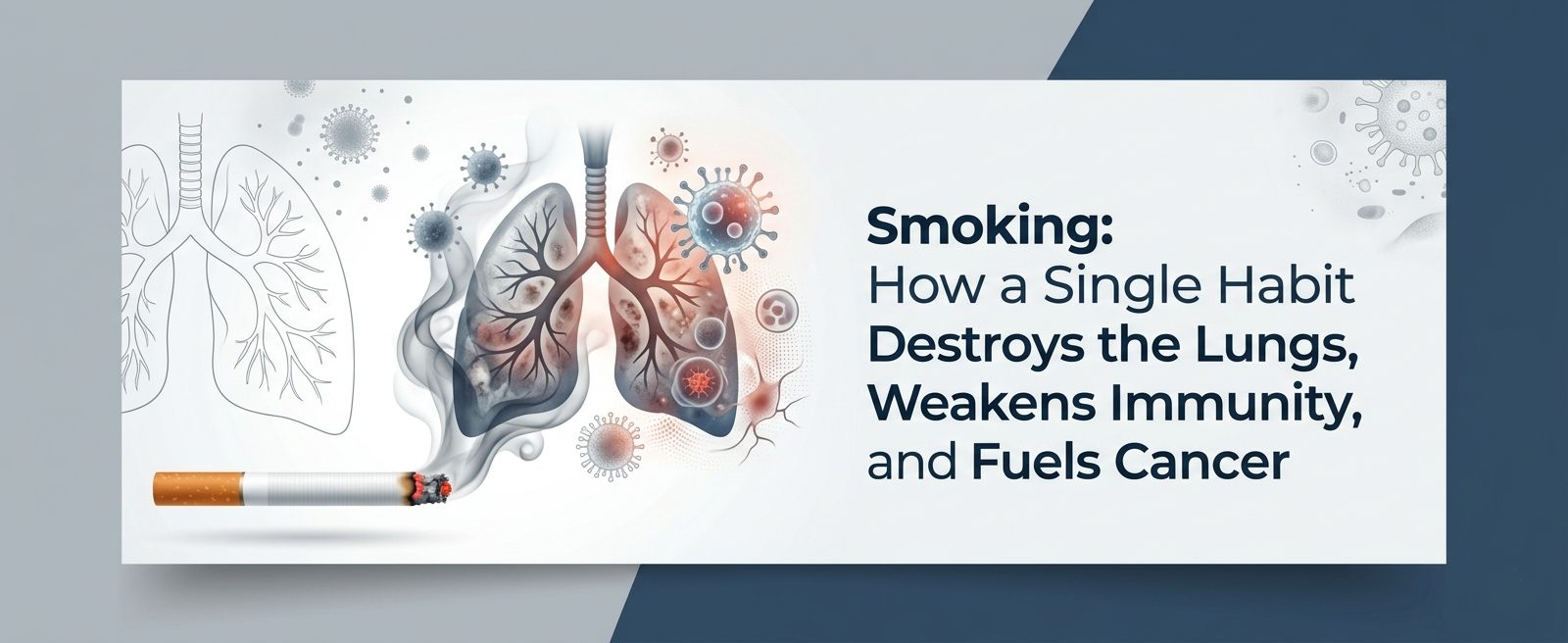
Smoking: How a Single Habit Destroys the Lungs, Weakens Immunity, and Fuels Cancer
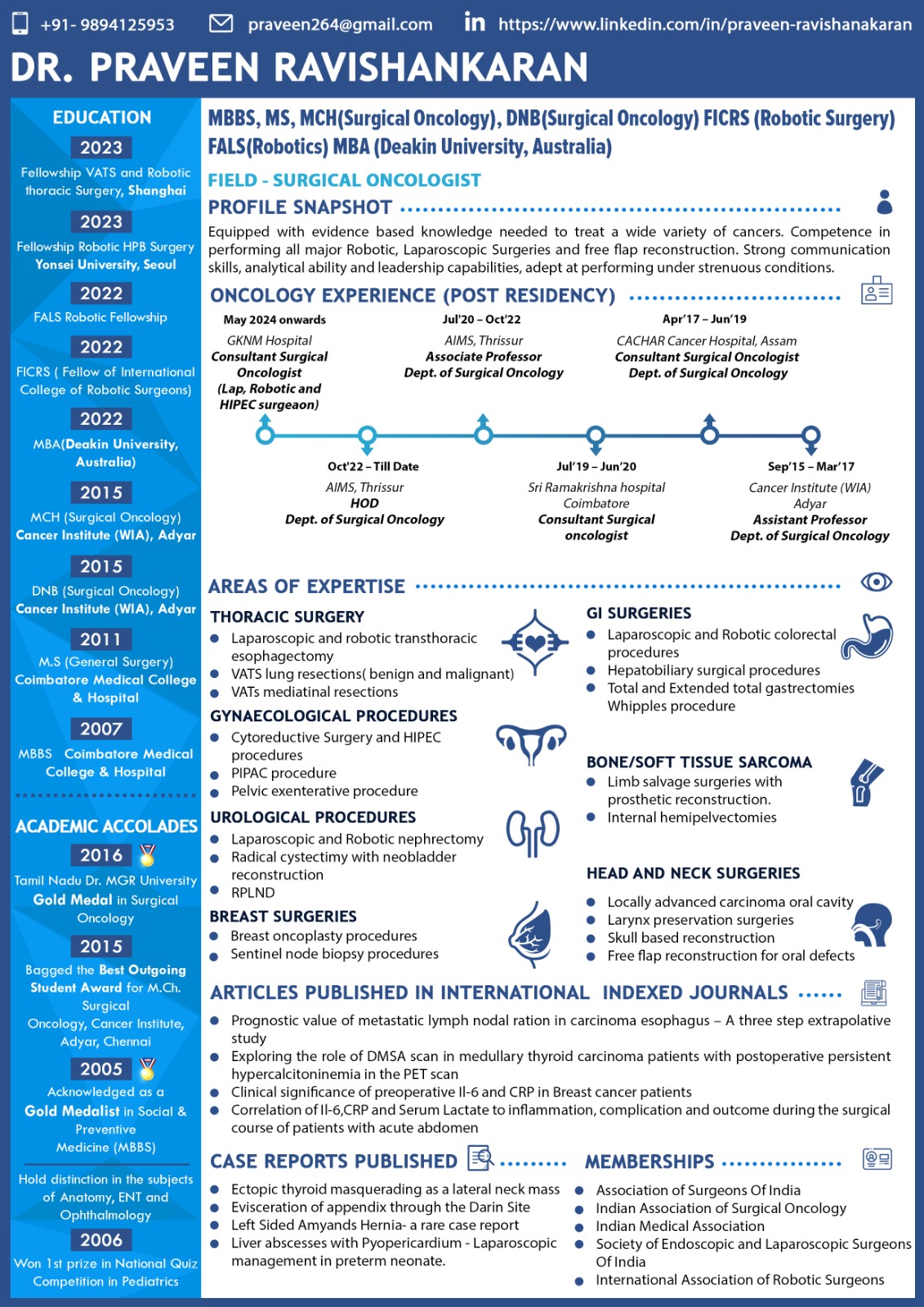
Dr. Praveen Ravishankaran,
Consultant Robotic Surgical Oncologist (Lap, Robotic and HIPEC Surgeon)
In-Charge, Robotic Surgery Program, GKNM Hospital
Arjun Cancer Centre and Pain Services (OPD Services Only)
Founder – Beacon of Hope Cancer Foundation
Introduction: Why Smoking Remains the Deadliest Preventable Habit
Smoking is not merely a lifestyle choice—it is one of the most powerful disease-causing behaviours known to medicine. Despite decades of awareness campaigns, smoking continues to be a leading cause of cancer, heart disease, stroke, chronic lung disease, and premature ageing and death.
As a Consultant Robotic Surgical Oncologist, I routinely operate on cancers that could have been completely prevented if smoking had never occurred. No other single habit damages as many organs, as consistently, and as irreversibly as tobacco use.
This article explains—clearly and scientifically—what smoking does to the body, why it causes cancer, and why quitting at any stage still saves lives.
What Is in a Cigarette? The Toxic Reality
A cigarette is not just tobacco wrapped in paper. It contains more than 7,000 chemicals, of which over 70 are proven carcinogens and hundreds are toxic to human cells. Key harmful substances include nicotine (highly addictive), tar, carbon monoxide, benzene, formaldehyde, polycyclic aromatic hydrocarbons (PAHs), and nitrosamines. There is no safe level of exposure to these substances.
How Smoking Affects the Body: Organ by Organ
1. Lungs: The Primary Victims
- Paralyses cilia that clear mucus
- Causes chronic airway inflammation
- Destroys alveoli
- Leads to chronic obstructive pulmonary disease (COPD)
- It is the leading cause of lung cancer, accounting for nearly 90% of cases.
2. Heart and Blood Vessels
- Damages blood vessel lining
- Accelerates atherosclerosis
- Increases clot formation
This dramatically raises the risk of heart attack, stroke, and peripheral vascular disease. Many smokers die of heart disease before cancer even develops.
3. Immune System: Silent Suppression
- Weakens immune surveillance
- Reduces natural killer (NK) cell activity
- Impairs antibody response
This leads to frequent infections, poor wound healing, and reduced response to cancer treatment. In oncology, smokers consistently show worse outcomes.
4. Digestive System
- Increases the risk of oral, oesophageal, gastric, pancreatic, and colorectal cancers
- Worsens acid reflux and peptic ulcer disease
5. Reproductive System
In men:
- Reduced sperm count
- Erectile dysfunction
In women:
- Infertility
- Pregnancy complications
- Increased cervical cancer risk
Smoking and Cancer: A Direct Genetic Assault
Cancer is fundamentally a genetic disease, and smoking is one of the strongest genetic mutagens.
How Smoking Causes Cancer
- Directly damages DNA
- Creates genetic mutations
- Disables tumour suppressor genes (like p53)
- Activates oncogenes
- Promotes chronic inflammation
Cancers strongly linked to smoking include those of the lung, oral cavity, larynx, oesophagus, bladder, pancreas, kidney, cervix, and stomach. There is no organ system that smoking spares.
Passive Smoking: Harm Without Choice
Second-hand smoke exposure causes lung cancer in non-smokers, increases childhood asthma, and raises heart disease risk. Children and spouses of smokers pay a silent price for someone else’s habit.
Smoking, Inflammation, and Immune Exhaustion
Smoking creates a vicious cycle: chronic inflammation damages tissues, persistent immune activation exhausts defences, and cancer cells evade detection. In my practice, smokers often present with more aggressive cancers, advanced-stage disease, and poor surgical recovery.
Is It Ever Too Late to Quit Smoking?
Absolutely not.
Benefits of Quitting Smoking
- Within 20 minutes: Heart rate normalises
- Within 24 hours: Carbon monoxide levels drop
- Within weeks: Lung function improves
- Within 1 year: Heart disease risk halves
- Within 5–10 years: Cancer risk significantly reduces
Even after a cancer diagnosis, quitting smoking improves treatment response, reduces complications, and improves survival.
Common Myths About Smoking
- “I smoke only occasionally.” – There is no safe frequency.
- “I switched to light cigarettes.” – They are equally harmful.
- “I exercise, so smoking won’t affect me.” – Fitness does not neutralise DNA damage.
- “I’ve smoked too long—no point quitting.” – This is medically false.
Medical Support for Smoking Cessation
Quitting smoking is not just willpower—it is medical management of addiction. Support may include behavioural counselling, nicotine replacement therapy, prescription medications, and regular follow-up. Medical guidance doubles the success rate of quitting.
Public Education Through The Wellness Oracle
To communicate the dangers of smoking in a memorable way, I run a YouTube channel: The Wellness Oracle. Through simple physics experiments, visual demonstrations, and movie scene analogies, I explain how smoking damages lungs, immunity, and genes—making the message impactful for all age groups.
When Should You Seek Medical Consultation?
Consult early if you smoke or have smoked in the past, have chronic cough or breathlessness, experience unexplained weight loss, have a family history of cancer, or want structured help to quit smoking. Early evaluation saves lives.
Consultation Details
GKNM Hospital
Monday to Saturday | 9:00 AM – 5:00 PM
Consultant Robotic Surgical Oncologist (Lap, Robotic and HIPEC Surgeon)
In-Charge, Robotic Surgery Program
Arjun Cancer Centre and Pain Clinic (OPD Services Only)
6:00 PM – 8:00 PM
Call to Action
If you smoke, have smoked, or are worried about smoking-related health risks, book a consultation early. Prevention is always superior to treatment.
About Dr. Praveen Ravishankaran
Dr. Praveen Ravishankaran is a Consultant Robotic Surgical Oncologist with expertise in robotic and minimally invasive cancer surgery and HIPEC Surgery, smoking-related cancers, and cancer prevention and public health education. He is actively associated with GKNM Hospital, Arjun Cancer Centre and Pain Clinic, and health education through The Wellness Oracle channel.
Websites and Educational Resources
YouTube: The Wellness Oracle
Medical References (For Authenticity and SEO Authority)
- U.S. Surgeon General’s Report. The Health Consequences of Smoking.
- World Health Organization (WHO). Tobacco and cancer factsheets.
- National Cancer Institute (NCI). Smoking and cancer risk.
- Doll R, Peto R. Mortality in relation to smoking. BMJ.
- Hecht SS. Tobacco smoke carcinogens and lung cancer. Nature Reviews Cancer.
- American Cancer Society. Health risks of smoking.
Final Thought
Smoking is not a habit—it is a progressive, preventable disease. Quitting is not weakness. Continuing is not strength. Stop smoking. Protect your genes. Preserve your immunity. Prevent cancer.
—
Dr. Praveen Ravishankaran
Consultant Robotic Surgical Oncologist (Lap, Robotic and HIPEC Surgeon)
In-Charge, Robotic Surgery Program
Arjun Cancer Centre and Pain Clinic (OPD Services Only)
Founder – Beacon Of Hope Cancer Foundation