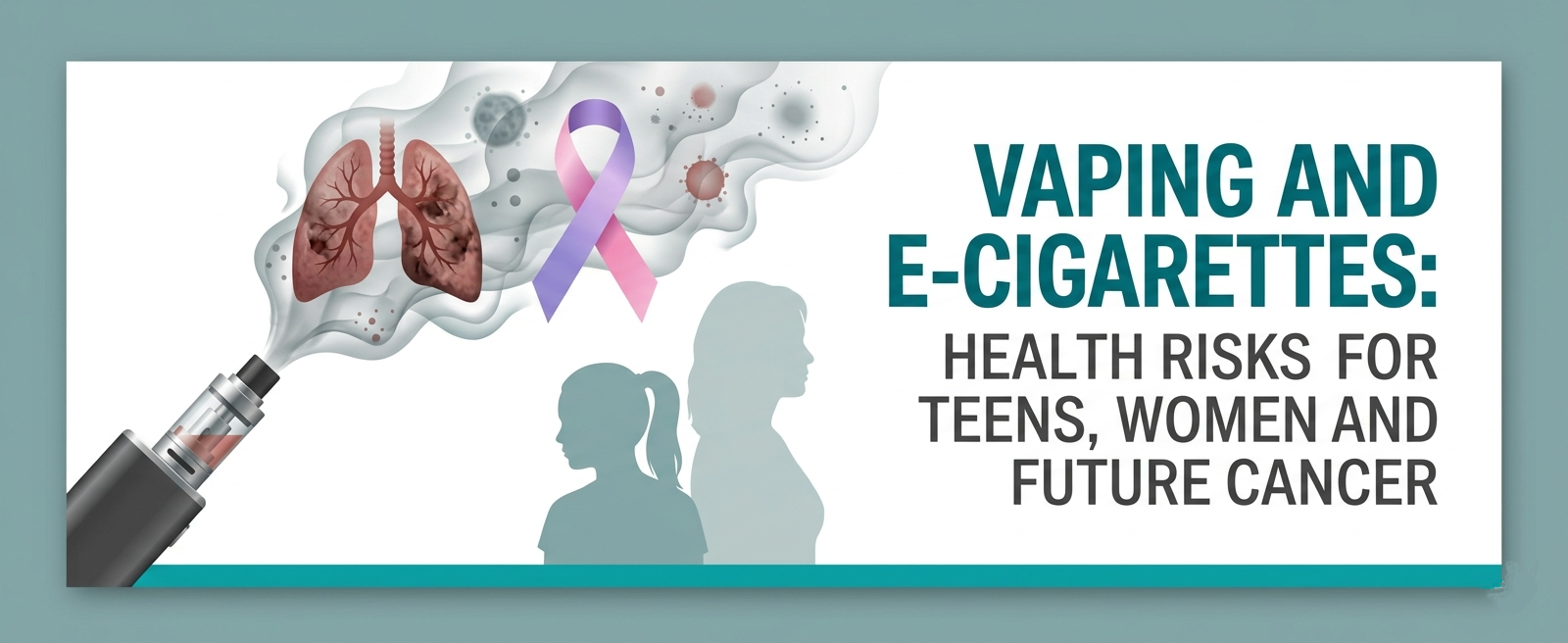
Vaping and E-Cigarettes: A Dangerous Experiment on the Health of Teens and Women
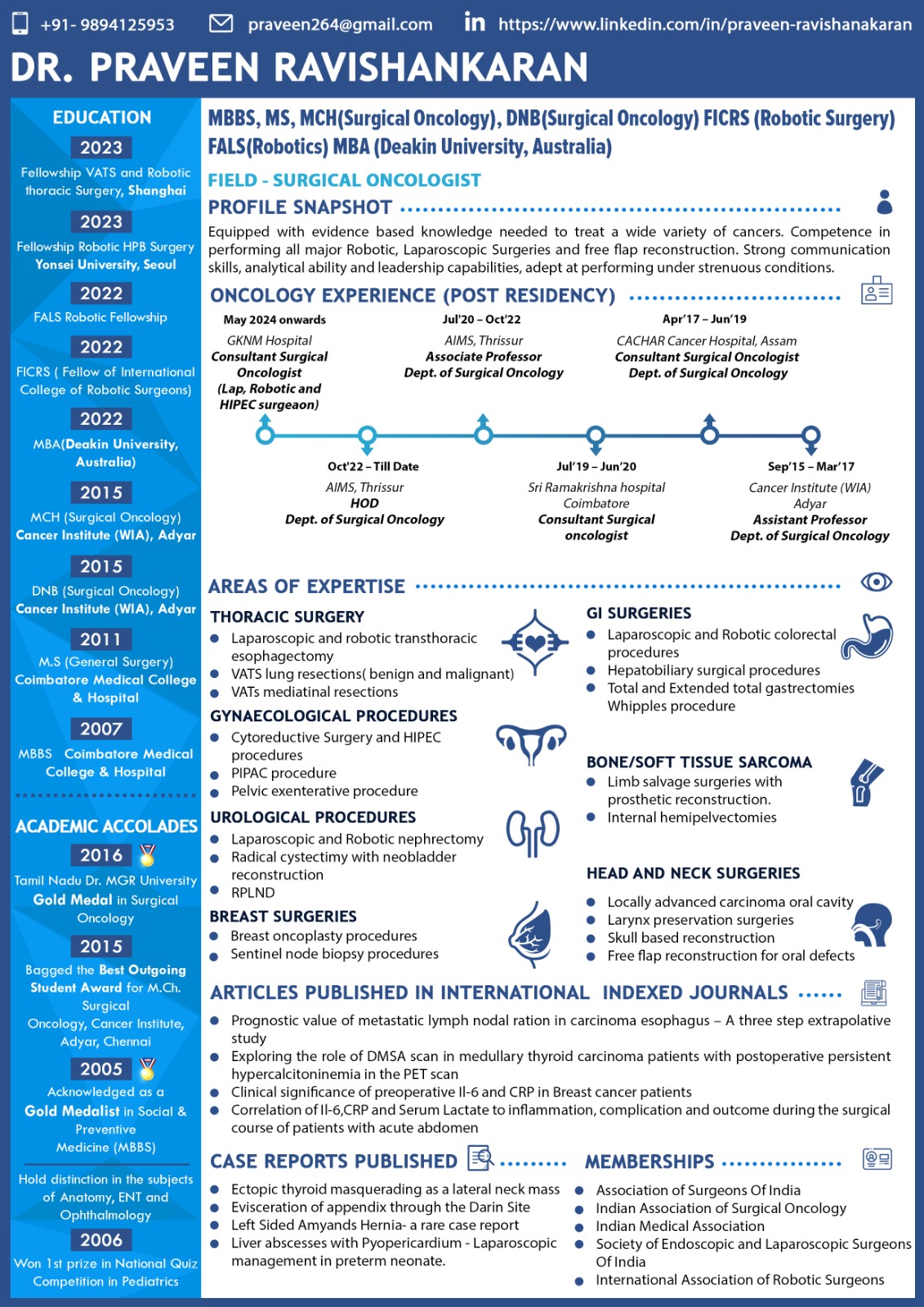
Dr. Praveen Ravishankaran
Consultant Robotic Surgical Oncologist (Lap, Robotic and HIPEC Surgery)
In-Charge, Robotic Surgery Program, GKNM Hospital
Arjun Cancer Centre and Pain Clinic (OPD Services Only)
Founder – Beacon of Hope Cancer Foundation
Introduction: The Myth of “Safe Smoking”
Vaping is frequently presented as a safe, cutting-edge, and harmless alternative to traditional smoking. With sleek devices, enticing fruity flavours, and aggressive social-media campaigns, vaping has been made especially appealing to teenagers and young women. This trend has unfortunately resulted in a new generation developing nicotine addiction.
From a medical and oncological perspective, this development is extremely alarming.
As a Consultant Robotic Surgical Oncologist, I often encounter young patients and their anxious families who are under the misconception that vaping is harmless. However, the reality sets in only when symptoms, addiction, or lasting health effects become apparent. Scientifically, vaping is not safe, it is not free of risks, and it is certainly not harmless.
This article aims to clarify the actual effects of vaping on the body, with a particular focus on teenagers and women, who are particularly susceptible to its detrimental impacts.
What Is Vaping?
Vaping refers to the act of inhaling an aerosol that is produced by an electronic cigarette (e-cigarette) or similar device. This aerosol is often incorrectly described as “vapour.”
In truth, it is a chemical aerosol containing several substances, including:
- Nicotine (often in very high concentrations)
- Ultrafine particles
- Volatile organic compounds
- Heavy metals such as nickel, lead, and chromium
- Flavouring chemicals that are linked to lung injury
Many users, especially teenagers, are unaware that they are ingesting nicotine while vaping.
Why Teens Are Especially Vulnerable to Vaping
1. The Developing Brain and Nicotine Addiction
The human brain keeps developing until the mid-twenties. Exposure to nicotine during adolescence can:
- Alter brain circuitry
- Impair attention and memory
- Increase anxiety and depression
- Create long-term addiction pathways
Teen brains become addicted faster and with greater intensity compared to adults.
2. Gateway to Smoking and Substance Use
Multiple studies have demonstrated that teenagers who vape are:
- More likely to take up cigarette smoking
- More likely to use alcohol and other substances
Vaping does not serve as an exit from smoking; rather, it is often the entry point.
3. Lung Damage at a Young Age
Vaping can cause:
- Airway inflammation
- Reduced lung growth
- Increased asthma and bronchitis
- Greater vulnerability to infections
Since teenage lungs are still in development, any damage is more severe and can be irreversible.
Vaping and Women: Unique and Underestimated Risks
1. Hormonal and Reproductive Effects
Nicotine impacts:
- Estrogen regulation
- Ovulation
- Fertility
Among women, vaping has been associated with:
- Menstrual irregularities
- Reduced fertility
- Increased complications during pregnancy
2. Pregnancy and Foetal Harm
Vaping during pregnancy is unsafe. Nicotine exposure increases the risks of:
- Low birth weight
- Preterm delivery
- Impaired brain development
- Sudden infant death syndrome (SIDS)
There is no “safe nicotine product” for use during pregnancy.
3. Increased Cancer Susceptibility
Women are biologically more susceptible to:
- DNA damage from toxins
- Hormonal modulation of cancer pathways
Vape aerosols contain carcinogenic substances that:
- Damage DNA
- Promote chronic inflammation
- Disrupt immune surveillance
Although the long-term cancer risks of vaping are still being studied, early molecular data is extremely concerning.
What Exactly Is Inside Vape Aerosol?
Regardless of marketing claims, vape aerosol is not water vapour. It contains:
- Nicotine salts (which are highly addictive)
- Formaldehyde and acetaldehyde
- Diacetyl (associated with “popcorn lung”)
- Heavy metals from heating coils
- Ultrafine particles that penetrate deep into the lungs
Continued exposure results in chronic inflammation and injury to cells.
Vaping, Inflammation, and Immune Suppression
From a cancer biology perspective, vaping:
- Causes ongoing airway inflammation
- Impairs immune cell function
- Weakens the lungs’ local immune defences
This environment is conducive to:
- Infections
- Tissue damage
- Genetic mutations
- Malignant transformation over time
In oncology, chronic inflammation is never benign.
Vaping and Cancer: What We Know So Far
Although vaping is a relatively recent phenomenon, early evidence has shown:
- Breaks in DNA strands in exposed cells
- Suppression of DNA repair mechanisms
- Mutations similar to those caused by smoking
Cancer does not develop overnight—it takes years of genetic injury to manifest. Vaping is establishing the foundation for future diseases.
The absence of immediate cancer cases does not indicate safety; it indicates delayed consequences.
Common Myths About Vaping
- “Vaping is safer than smoking.” Less harmful does not mean safe.
- “It’s just flavour and water vapour.” This statement is medically inaccurate.
- “I don’t vape every day.” Even occasional use can cause addiction and harm.
- “Everyone is doing it.” Widespread behaviour does not guarantee safety.
The Social Media Trap: Why Teens and Women Are Targeted
Vape marketing strategies intentionally:
- Use bright colours and sweet flavours
- Target body image and promise stress relief
- Normalise use through social media influencers
This is not by accident—it is a calculated approach designed to foster addiction.
When Should Parents and Women Seek Medical Advice?
Seek professional guidance early if:
- A teenager is vaping or experimenting
- Symptoms such as cough, breathlessness, or anxiety are present
- There is difficulty quitting vaping
- Pregnancy is being planned or is ongoing
- There are concerns about long-term cancer risks
Early counselling can help prevent a lifelong addiction.
Public Education Through The Wellness Oracle
To combat misinformation, I run a health education channel on YouTube called The Wellness Oracle, where I use:
- Simple experiments
- Visual demonstrations
- Movie scenes and analogies
These tools help me explain how vaping affects the lungs, immunity, hormones, and genes—especially to young minds and families.
Consultation Details
- GKNM Hospital: Monday to Saturday | 9:00 AM – 5:00 PM
Consultant Robotic Surgical Oncologist (Lap, Robotic and HIPEC Surgeon)
In-Charge, Robotic Surgery Program
- Arjun Cancer Centre and Pain Clinic: 6:00 PM – 8:00 PM
Call to Action
If you, your child, or a loved one is vaping—or even considering it—please book a consultation as early as possible. Prevention is far easier than reversal.
About Dr. Praveen Ravishankaran
Dr. Praveen Ravishankaran is a Consultant Robotic Surgical Oncologist who specialises in:
- Cancers related to tobacco and vaping
- Robotic and minimally invasive cancer surgery
- HIPEC Surgery
- Cancer prevention and public health education
He is actively associated with GKNM Hospital, Arjun Cancer Centre, and health education initiatives through The Wellness Oracle.
Websites and Educational Resources
- https://www.drpraveenroboticsurgeon.com
- https://www.beaconofhopecancerfoundation.com
- YouTube: The Wellness Oracle
Medical References (For Authenticity and SEO Authority)
- World Health Organization (WHO). Electronic nicotine delivery systems (ENDS).
- U.S. Centers for Disease Control and Prevention (CDC). E-cigarettes and youth.
- National Academies of Sciences. Health effects of e-cigarettes.
- Gotts JE et al. What are the respiratory effects of e-cigarettes? BMJ.
- Chun LF et al. Pulmonary toxicity of e-cigarettes. Archives of Toxicology.
- American College of Obstetricians and Gynecologists (ACOG). Vaping and pregnancy.
Final Thought
Vaping is not a harmless trend; it is a public health experiment with young lives at risk.
Protect teenagers.
Protect women.
Protect future generations.
Say no to vaping. Say yes to informed choices.
—
Dr. Praveen Ravishankaran
Consultant Robotic Surgical Oncologist (Lap, Robotic and HIPEC Surgeon)
In-Charge, Robotic Surgery Program
Arjun Cancer Centre and Pain Clinic (OPD Services Only)
Founder – Beacon of Hope Cancer Foundation