Genes and Genetic Mutations: How Tiny Errors in DNA Shape Health, Disease, and Cancer
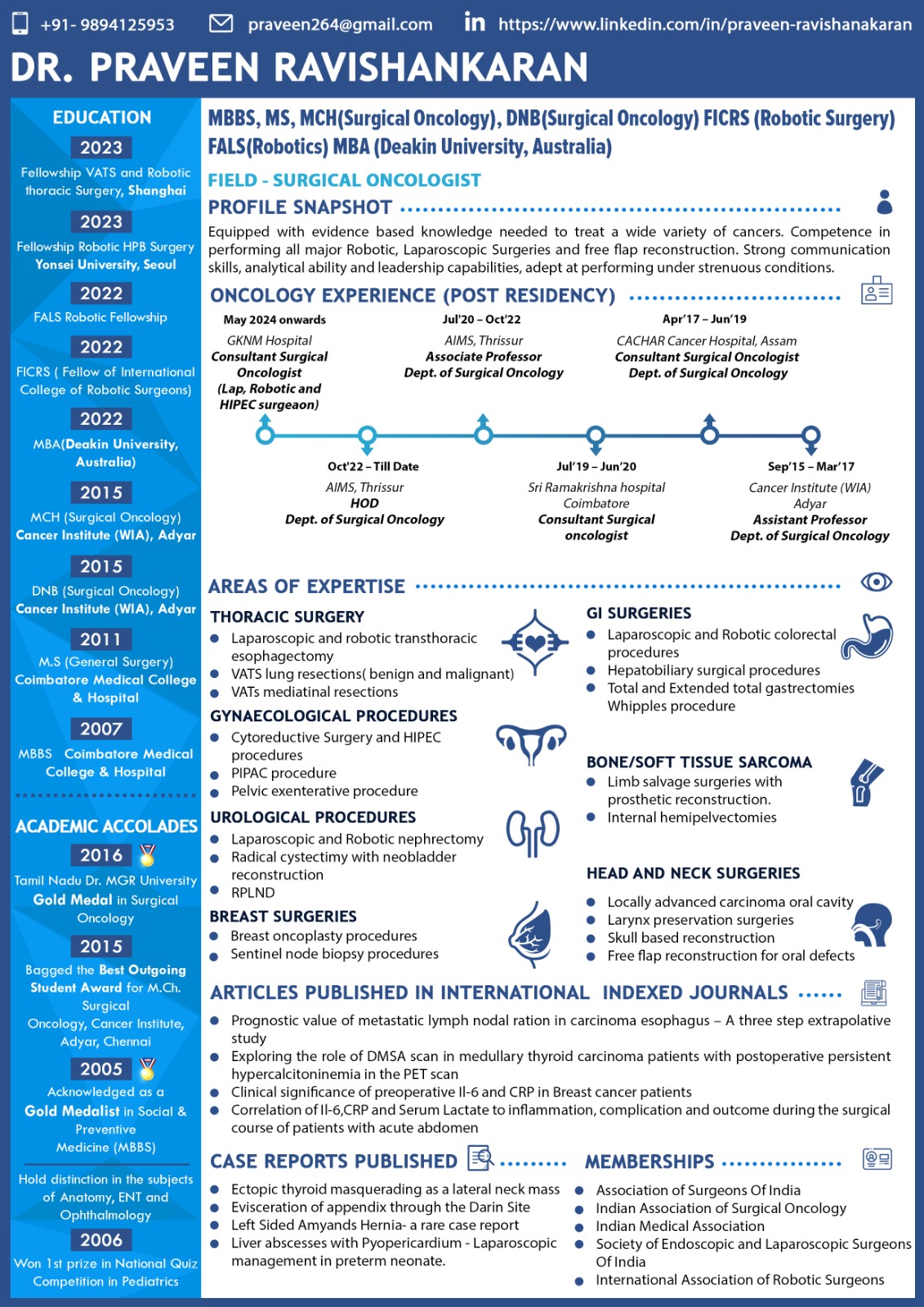
Dr. Praveen Ravishankaran
Consultant Robotic Surgical Oncologist (Lap, Robotic and HIPEC Surgery)
In-Charge, Robotic Surgery Programme
GKNM Hospital | Arjun Cancer Centre and Pain Clinic (OPD Services Only)
Founder – Beacon of Hope Cancer Foundation
Introduction: Why Genes Matter More Than You Think
Every cell in your body carries a set of instructions that determines how you grow, heal, age, and fight disease. These instructions are written in a language called DNA, and the functional units of this DNA are known as genes.
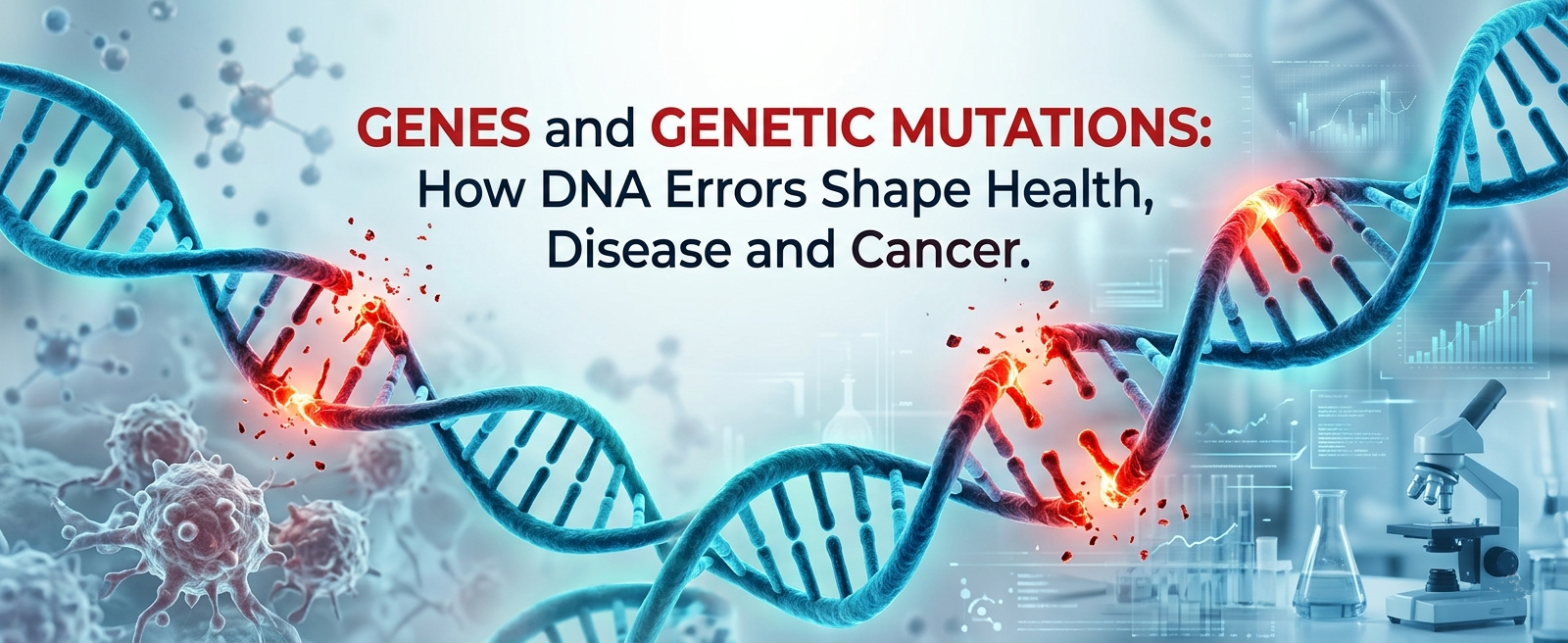
When genes function normally, the body maintains balance. When genes acquire errors—called genetic mutations—this balance is disturbed, leading to disease, ageing, and most importantly, cancer.
As a Consultant Robotic Surgical Oncologist, I routinely treat cancers whose origins trace back to years or decades of accumulated genetic damage. Understanding genes and mutations is therefore not theoretical science—it is practical preventive medicine.
What Are Genes? A Simple Medical Explanation
Genes are specific segments of DNA that:
- Encode proteins
- Regulate cell growth and repair
- Control immunity, metabolism, and cell death
Every human cell contains approximately 20,000–25,000 genes, packed into 23 pairs of chromosomes.
These genes act like:
- An instruction manual
- A quality control system
- A repair blueprint
When genes are intact, cells behave normally. When genes are damaged, cells may behave unpredictably.
What Is a Genetic Mutation?
A genetic mutation is a permanent change in the DNA sequence of a gene.
Mutations may:
- Alter protein structure
- Disrupt normal cell signalling
- Prevent repair of damaged DNA
- Allow abnormal cells to survive and multiply
Not all mutations are harmful. Some are harmless, and a few may even be beneficial. However, certain mutations drive disease and cancer.
Types of Genetic Mutations
1. Inherited (Germline) Mutations
These mutations:
- Are passed from parent to child
- Exist in every cell of the body
- Increase lifetime cancer risk
Examples include:
- BRCA1/BRCA2 (breast, ovarian cancer)
- Lynch syndrome genes (colon cancer)
- APC gene (familial polyposis)
Inherited mutations do not guarantee cancer, but they significantly raise risk.
2. Acquired (Somatic) Mutations
These mutations:
- Occur during a person’s lifetime
- Are caused by environmental and lifestyle factors
- Accumulate with age
Major causes include:
- Tobacco
- Alcohol
- Radiation
- Chronic inflammation
- Viral infections
- Age-related DNA replication errors
Most cancers arise from acquired mutations, not inherited ones.
How Do Genetic Mutations Lead to Cancer?
Cancer is fundamentally a genetic disease of the cell.
Normal cells follow strict rules:
- Grow when needed
- Stop growing when signalled
- Repair damage
- Undergo programmed death (apoptosis)
Genetic mutations disrupt these rules.
Key Cancer-Driving Genes
- Oncogenes – Promote uncontrolled growth
- Tumour Suppressor Genes – Normally restrain growth (e.g., p53)
- DNA Repair Genes – Fix damaged DNA
Cancer develops when multiple mutations accumulate across these gene categories.
The Role of Inflammation and Lifestyle in Genetic Damage
Genetic mutations do not occur in isolation.
Chronic inflammation:
- Produces reactive oxygen species
- Directly damages DNA
- Interferes with repair mechanisms
Lifestyle factors that accelerate mutations include:
- Smoking
- Alcohol
- Obesity
- Poor diet
- Sedentary habits
- Chronic stress
In oncology, we often say: “Genes load the gun, lifestyle pulls the trigger.”
Genetic Mutations and Cancer Risk: What the Public Must Understand
Having a genetic mutation does not mean cancer is inevitable.
Risk depends on:
- Type of mutation
- Environmental exposure
- Immune system strength
- Early detection and intervention
With appropriate screening and preventive strategies, many genetically predisposed cancers can be:
- Detected early
- Prevented
- Treated successfully
Genetic Testing: When Is It Useful?
Genetic testing is recommended when:
- There is a strong family history of cancer
- Cancer occurs at a young age
- Multiple cancers occur in the same individual
- Rare or aggressive cancers are diagnosed
Testing allows:
- Risk stratification
- Targeted screening
- Preventive strategies
- Informed family counselling
Genetic information must always be interpreted by trained clinicians to avoid unnecessary anxiety or misinterpretation.
Genetics and Modern Cancer Treatment
Advances in cancer care now rely heavily on genetic understanding.
Genetic profiling helps:
- Select targeted therapies
- Predict treatment response
- Guide immunotherapy
- Avoid unnecessary toxicity
In surgical oncology, genetic risk assessment also influences:
- Timing of surgery
- Extent of surgery
- Surveillance strategies
As someone involved in advanced robotic cancer surgery, I strongly emphasise precision medicine guided by genetics.
Warning Signs That Warrant Genetic Evaluation
Seek expert consultation if you have:
- Multiple relatives with the same cancer
- Cancer diagnosed before age 50
- Bilateral or multiple primary cancers
- Rare cancers in the family
- Recurrent cancers despite treatment
Early genetic evaluation can be life-saving—not just for you, but for your family.
Public Education Through The Wellness Oracle
To simplify complex topics like genetics for the general public, I run a YouTube health education channel:
The Wellness Oracle
Through:
- Simple physics experiments
- Visual analogies
- Movie scenes
I explain how genes, mutations, inflammation, and immunity interact—making science understandable and memorable for all age groups.
Consultation Details
GKNM Hospital
- Monday to Saturday | 9:00 AM – 5:00 PM
- Consultant Robotic Surgical Oncologist
- In-Charge, Robotic Surgery Programme
Arjun Cancer Centre and Pain Clinic (OPD Services Only)
- 6:00 PM – 8:00 PM (Monday – Saturday)
Call to Action
If you have concerns about genetic risk, family history of cancer, or long-term disease prevention, book a consultation early. Knowledge is protection.
About Dr. Praveen Ravishankaran
Dr. Praveen Ravishankaran is a Consultant Robotic Surgical Oncologist with expertise in:
- Robotic and minimally invasive Laparoscopic cancer surgery
- HIPEC Surgery
- Precision oncology
- Cancer prevention and public health education
He is actively associated with:
- GKNM Hospital
- Arjun Cancer Centre and Pain Clinic
- Health education through The Wellness Oracle
Websites and Educational Resources
- https://www.drpraveenroboticsurgeon.com
- https://www.beaconofhopecancerfoundation.com
- YouTube: The Wellness Oracle
Medical References (For Authenticity and SEO Authority)
- Vogelstein B, Kinzler KW. Cancer genes and the pathways they control. Nature Medicine.
- Hanahan D, Weinberg RA. Hallmarks of cancer. Cell.
- National Cancer Institute (NCI). Genetics of cancer.
- World Health Organization (WHO). Cancer genomics and prevention.
- Alberts B et al. Molecular Biology of the Cell.
- Fearon ER, Vogelstein B. A genetic model for colorectal tumorigenesis. Cell.
- American Society of Clinical Oncology (ASCO). Genetic testing and cancer risk.
Final Thought
Genes are not destiny—but ignorance of genetic risk can be dangerous.
- Understand your genes.
- Reduce preventable mutations.
- Detect cancer early.
- Protect future generations.
—
Dr. Praveen Ravishankaran
Consultant Robotic Surgical Oncologist (Lap, Robotic and HIPEC Surgeon)
In-Charge, Robotic Surgery Programme, GKNM Hospital
Oncologist, Arjun Cancer Centre and Pain Clinic (OPD Services Only)
Founder, Beacon of Hope Cancer Foundation